 By Admin
Telemetryczny systems are becoming essential in industries that rely on remote data monitoring, automation, and operational accuracy. Telemetry today powers everything from smart cities to industrial IoT platforms.
In the first two lines of this guide, you will learn what a telemetryczny solution is and why it matters in modern digital ecosystems.
This article provides an expert, easy-to-understand breakdown of how telemetry works, its applications, benefits, tools, and best practices, ensuring you fully meet your informational or commercial search intent without needing another source.
Telemetry refers to the automated collection, transmission, and interpretation of remote data. Modern telemetry uses sensors, wireless networks, cloud platforms, and analytics tools to track performance, detect anomalies, and support decision-making.
As companies scale operations, telemetry becomes a backbone for reliability and operational intelligence.
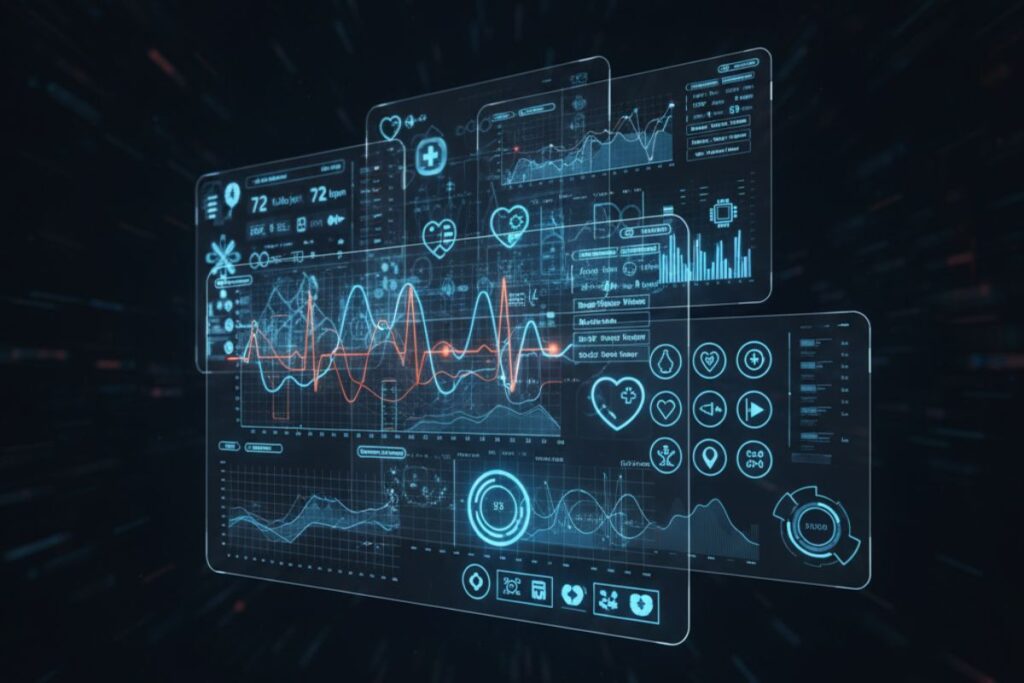
Telemetry systems follow a simple but effective data pipeline. Despite variation across industries, the basic architecture remains consistent.
- Sensors and meters – capture data such as pressure, speed, temperature, or energy usage.
- Transmitters – send this data using radio, cellular, satellite, or IP networks.
- Receivers and gateways – gather incoming signals and convert them into readable formats.
- Cloud or local servers – process and store the information.
- Dashboards and analytics tools – present results for monitoring or automation.
Many energy companies in 2025 use telemetry to remotely read meters, reducing operational costs by over 30% while improving performance visibility across their networks.
Telemetry applications vary widely, but they generally fit into several categories.
Common in manufacturing, mining, oil, and energy sectors, where precision monitoring prevents downtime.
Used in smart homes, wearables, connected vehicles, and environmental monitoring.
Tracks heart rate, oxygen levels, and patient vitals remotely. Although highly regulated, it supports faster emergency responses and better patient outcomes.
Essential for navigation, rocket testing, climate science, and satellite management.
Today’s platforms include advanced capabilities designed for scalable, secure data management.
Continuous, low-latency data streams help teams respond instantly to anomalies.
Cloud telemetry simplifies scaling, storage, and data collaboration.
Machine learning models predict failures, optimize operations, and detect unusual behaviour.
Modern encryption standards ensure safe transmission across networks.
A telemetryczny mindset supports operational excellence in every industry. Businesses that adopt telemetry enjoy benefits like productivity gains, predictive maintenance, and improved safety.
Telemetry reduces manual inspections and reveals real-time asset health.
Automation eliminates unnecessary human intervention and prevents equipment damage.
Telemetry helps companies meet environmental and safety standards by maintaining accurate digital logs.
Industrial IoT relies heavily on telemetry, especially in 2025 when automation is at its peak.
Sensors distributed across machines gather data such as:
- vibration
- heat
- energy consumption
- operational speed
This information flows into a centralized hub where analytics engines evaluate equipment performance and predict future issues.
A manufacturing line uses telemetry sensors to detect abnormal vibration in rotating machinery. Before the problem escalates, the maintenance team receives an alert and prevents a costly breakdown.
Cities worldwide adopt telemetry-driven systems to manage public services with maximum efficiency.
- Traffic management using real-time congestion data
- Water system monitoring to detect leaks
- Air-quality sensors for environmental safety
- Smart lighting adjusting brightness based on conditions
Through these applications, cities reduce energy usage, improve mobility, and deliver a better quality of life.
Automotive and logistics sectors depend heavily on telemetry tracking today.
Telemetry solutions in vehicles track:
- engine performance
- fuel levels
- GPS movement
- driver behaviour
- maintenance needs
A logistics company uses telemetry to monitor temperature in refrigerated trucks, ensuring food safety during long shipments.
Protecting telemetry data is one of the most important challenges in 2025. Because telemetry flows continuously, it requires robust security measures.
- end-to-end encryption
- multi-factor authentication
- anomaly detection
- secure APIs
- network segmentation
Leaking telemetry data can reveal sensitive performance indicators or operational weaknesses. Security-first design ensures trust and compliance.
Selecting a telemetryczny platform depends on project scale, data volume, and operational goals.
1. Data Types & Formats
Ensure the platform supports structured, semi-structured, and time-series data.
2. Integration Options
Look for compatibility with existing ERP, SCADA, cloud, or IoT hardware.
3. Cost & Scalability
Choose solutions that grow with your needs without excessive licensing fees.
4. Reliability & Uptime
A trustworthy provider must offer 99%–99.9% uptime and dependable support.
Implementing telemetry correctly ensures long-term efficiency and accuracy.
Define what data you need, how often you collect it, and what decisions it should support.
Accurate sensors reduce noise and produce reliable analytics.
Set thresholds and automatic alerts to respond to anomalies faster.
Operational teams need to understand dashboards, alerts, and reporting tools.
Even robust telemetry systems face obstacles, but proper planning overcomes them.
Too many sensors cause unnecessary noise. Use filtering and proper configuration.
Remote areas require satellite or long-range radio solutions.
Routine calibration prevents false readings.
Upgrading firmware and using encryption keeps systems safe.
Although we avoid future predictions, current 2025 telemetry trends highlight growth in automation and real-time analytics.
- AI-assisted root-cause analysis
- Integration with digital twins
- Robust edge computing for faster insights
- Expansion into environmental sustainability projects
These trends reflect increasing global demand for intelligent monitoring systems.
Telemetry systems play a vital role in modern industry, IoT, healthcare, and smart cities. A telemetryczny approach helps organisations improve accuracy, reduce downtime, and enhance safety through real-time remote monitoring. As technology advances in 2025, businesses that integrate telemetry unlock stronger operational control and long-term growth.
A telemetry system automatically collects and transmits data from remote locations for monitoring, analysis, and control.
Yes, when encryption, authentication, and secure networks are used.
Yes, it can use radio, satellite, or local networks depending on the setup.
Yes, by preventing equipment failure and reducing manual inspections.
Yes, vehicles, smart meters, wearables, and home devices use telemetry.
Yes, even small operations gain insights into performance and resource usage.
Also Read:
Wollmatten Guide 2025: Uses, Benefits & Installation Tips
 Khizer Seo