 By Admin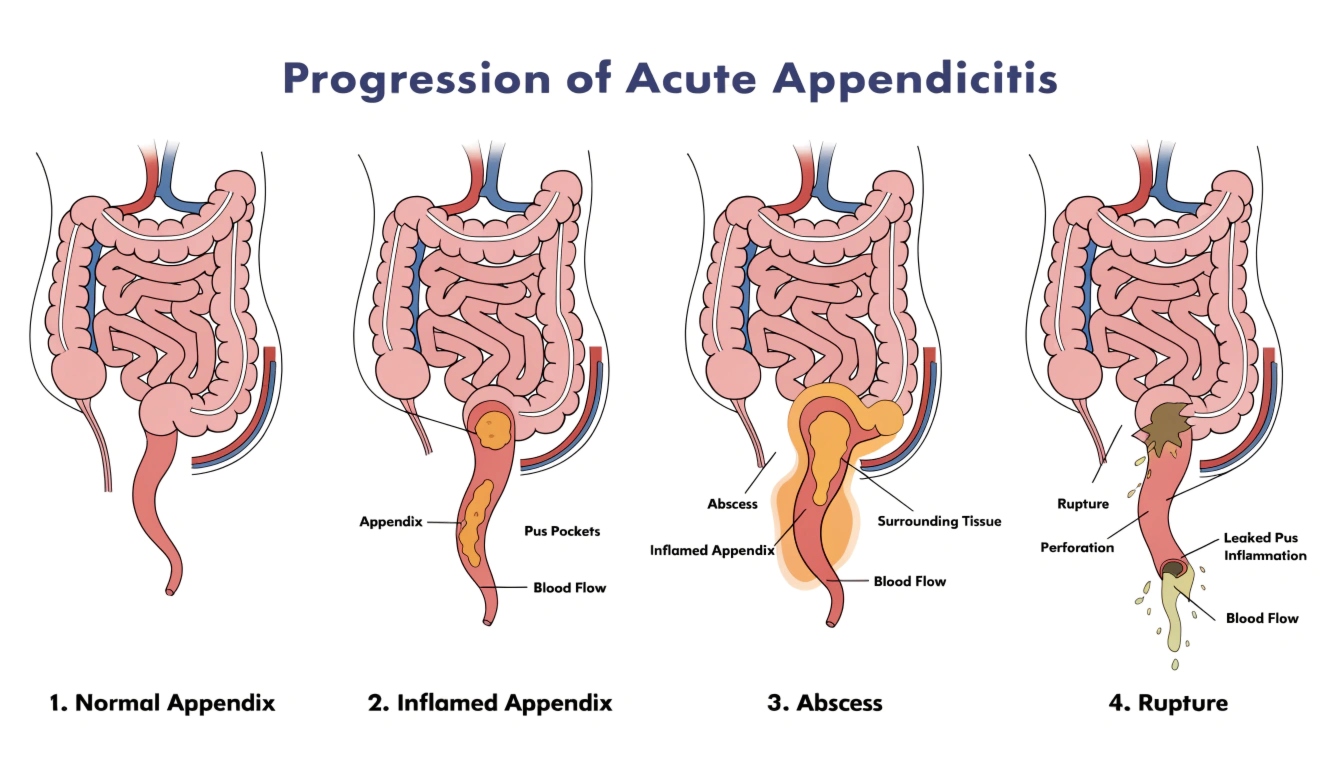
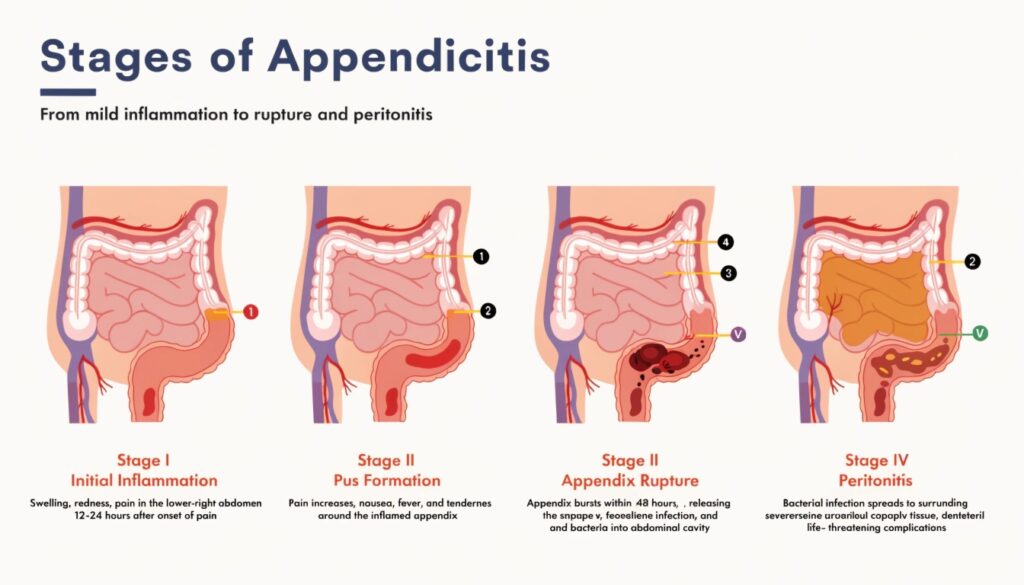
The 4 stages of appendicitis explain how appendix infection starts to grow and becomes dangerous if not treated on time. Appendicitis is a common medical emergency that can affect anyone especially young people.
In the beginning symptoms may look mild but the condition can quickly become serious. Understanding these stages helps people recognize warning signs early and seek medical help before complications appear. Many people ignore early pain which increases risk.
Learning about causes, symptoms, diagnosis, treatment and prevention can protect health and even save life.
Appendicitis is swelling and infection of the appendix a small finger shaped organ attached to the large intestine on the lower right side of the abdomen. When the appendix gets blocked bacteria multiply inside and cause infection swelling and pressure.
The appendix does not have a very important role in digestion. Some doctors believe it supports the immune system by storing helpful bacteria but the body can function normally without it.
Common causes include:
- Hard stool blocking the appendix
- Infection in digestive tract
- Swelling of lymph tissue
- Parasites or rarely tumors
If not treated pressure increases, blood flow stops and the appendix may burst spreading infection in the abdomen.
Knowing the 4 stages of appendicitis helps people recognize danger early and seek quick treatment before complications grow.
In the early stage treatment is simple and recovery is fast. Delayed treatment increases risk of rupture and severe infection.
| Early Treatment | Late Treatment |
| Quick recovery | Severe infection |
| Simple surgery | Complex surgery |
| Less pain | More pain |
| Low complications | High complications |
| Short hospital stay | Long hospital stay |
- People aged 10 to 30
- People with low fiber diet
- Family history of appendicitis
- Digestive infections
Understanding stages helps people avoid delay and protect life.
This is the beginning of infection. Symptoms are mild so many people ignore them.
- Dull pain near belly button
- Mild fever
- Loss of appetite
- Slight nausea or discomfort
The appendix becomes blocked by stool or swelling. Bacteria start growing slowly causing mild inflammation.
Treatment at this stage is easiest. Sometimes antibiotics work but doctors often recommend surgery to avoid progression.
Many people confuse this pain with gas acidity or stomach upset and delay medical help.
At this stage infection becomes stronger and pus starts forming inside the appendix.
- Pain shifts to lower right abdomen
- Fever increases
- Vomiting begins
- Pain becomes sharp and constant
Pus collects in the appendix, pressure increases and swelling becomes severe. Blood flow starts reducing.
Moderate to high. Delay in treatment can quickly lead to tissue damage.
Urgent medical check is required. Surgery is usually needed to stop infection from spreading.
This is a dangerous stage where appendix tissue begins dying due to lack of blood supply.
- Severe sharp pain
- High fever
- Weakness and tiredness
- Rapid heartbeat
- Nausea and vomiting
The appendix tissue becomes dead (gangrene). Infection becomes aggressive and spreads faster.
The appendix is close to rupture. Emergency surgery is required.
- Severe infection
- Internal damage
- High risk of rupture
This is the most serious stage of the 4 stages of appendicitis.
The appendix breaks open releasing bacteria and infection into the abdominal cavity.
- Sudden relief followed by severe pain
- Very high fever
- Swollen and hard abdomen
- Difficulty walking or moving
- Severe weakness
- Peritonitis (abdominal lining infection)
- Sepsis (infection in blood)
- Organ failure
Immediate surgery and hospital care are necessary to save life.
| Stage | Pain | Infection | Damage | Risk Level | Treatment |
| Stage 1 | Mild | Low | Minimal | Low | Simple treatment |
| Stage 2 | Moderate | Medium | Increasing | Moderate | Urgent surgery |
| Stage 3 | Severe | High | Tissue damage | High | Emergency surgery |
| Stage 4 | Extreme | Very High | Rupture | Life threatening | Critical care |
This table clearly shows how risk and danger increase step by step.
Doctors use different tests to confirm appendicitis and identify its stage.
The doctor presses the abdomen to check pain location and swelling.
- Blood test (infection level)
- Urine test (rule out other problems)
- Ultrasound
- CT Scan
- MRI (rare cases)
Correct diagnosis prevents wrong treatment and helps doctors decide surgery timing.
Treatment depends on stage and severity of infection.
The most common and effective treatment. The appendix is removed to stop infection.
Used in early stage or after surgery to control infection.
| Laparoscopic Surgery | Open Surgery |
| Small cuts | Larger cut |
| Fast recovery | Slow recovery |
| Less pain | More pain |
| Less scar | Visible scar |
| Modern technique | Traditional method |
Late stages may require IV fluids strong antibiotics and monitoring.
Recovery depends on stage and treatment timing.
- Early stage: 1–2 weeks
- Complicated stage: 3–6 weeks
- Avoid heavy work
- Take medicines regularly
- Keep wound clean
- Eat light food
- Do not ignore stomach pain
- Eat fiber rich foods
- Drink plenty of water
- Maintain digestive health
- Fever
- Increasing pain
- Vomiting
- Swelling or redness
Seek medical help immediately if symptoms appear.
No once the appendix is removed appendicitis cannot occur again.
Usually yes but early pain may start near the belly button.
It may rupture within 24 to 72 hours if untreated.
It is slightly more common in men but can affect both.
A low fiber diet may increase risk but appendicitis has multiple causes.
Understanding the 4 stages of appendicitis is essential because this condition can quickly turn from mild to life threatening. The early stage begins with small symptoms but as infection grows pain swelling and risk increase. The final stage rupture is a medical emergency that can cause severe infection and organ damage.
Recognizing warning signs like abdominal pain, fever nausea and loss of appetite helps people seek treatment early. Quick diagnosis, timely surgery and proper recovery care reduce complications and ensure safe healing.
Never ignore continuous stomach pain. Early action is the best protection against serious health risks and helps maintain long term well being.
Ironmartonline reviews – Trust Ironmartonline Reviews
Sqrwomensrestroom – Experience Comfort and Privacy
schoology alfa – Learn Using Alfa